
Konstas's 149 at the WACA: White-Ball Runs Cannot Settle a Red-Ball Opening Slot
**मुख्य उत्तर** सम कोन्स्टास ने वन-डे कप के वाका ग्राउंड मुकाबले में वेस्टर्न ऑस्ट्रेलिया के खिलाफ 131 गेंदों पर 149 रन बनाए और न्यू साउथ वेल्स 78 रन से जीता। यह लिस्ट-A प्रदर्शन टेस्ट ओपनिंग की दावेदारी सिद्ध नहीं करता, क्योंकि उनकी नौ टेस्ट पारियाँ 25 रन से कम पर समाप्त हुई हैं। **मुख्य तथ्य** - कोन्स्टास के 149 रन में 84 रन (56.4%) चौकों और छक्कों से आए; स्ट्राइक रेट 113.7 रहा। - न्यू साउथ वेल्स ने आठ विकेट पर 371 रन बनाए; वेस्टर्न ऑस्ट्रेलिया 46.3 ओवर में 293 पर सिमट गया। - कोन्स्टास ने 26 दिसंबर 2024 को बॉक्सिंग डे टेस्ट में 60 रन बनाए, फिर नौ पारियों में 25 का आंकड़ा नहीं छुआ। - वेस्टर्न ऑस्ट्रेलिया वन-डे कप 2025-26 सत्र में 0-3 है; न्यू साउथ वेल्स 3-1 के साथ दूसरे स्थान पर है। - निस्बेट ने 47 रन देकर 3 विकेट और जैक्सन ने 58 रन देकर 2 विकेट लिए; शेष पाँच विकेट दर्ज नहीं हैं। **स्रोत** मूल स्रोत: cricket.com.au की मैच रिपोर्ट, वन-डे कप 2025-26 सत्र | Cross-checked: cricsultan.com **संबंधित प्रश्न-उत्तर** प्रश्न: क्या कोन्स्टास का शतक टेस्ट टीम में वापसी सुनिश्चित करता है? उत्तर: नहीं, यह लिस्ट-A का प्रदर्शन है और उनकी नौ टेस्ट पारियाँ 25 से कम रही हैं, इसलिए चयन का आधार शेफील्ड शील्ड का लाल गेंद प्रदर्शन होगा। प्रश्न: कोन्स्टास की 149 रन की पारी कितनी प्रभावशाली थी? उत्तर: 113.7 का स्ट्राइक रेट शीर्ष स्तर का है, पर 56.4% रन सीमाओं से आए, जो उच्च जोखिम वाली बल्लेबाज़ी की ओर संकेत करता है। प्रश्न: वेस्टर्न ऑस्ट्रेलिया का रिकॉर्ड इस पारी के मूल्य को कैसे प्रभावित करता है? उत्तर: वेस्टर्न ऑस्ट्रेलिया वन-डे कप 2025-26 में 0-3 है और उसने 371 रन खाए, इसलिए प्रतिद्वंद्वी-समायोजित दृष्टि से यह दौर कच्चे आंकड़े से कम का है; cricsultan.com Team Form Index में यह गिरावट दर्ज है।
What happened in the 41st over was the most overlooked moment of the match
Whiteman was on 99 and called for the single. Agar ran, was late reaching the crease, and was run out. Western Australia were chasing 371, and from roughly the 35th over their required rate had already crossed 13 an over. That run-out ended the only partnership capable of touching that rate. The match finished with a 78-run margin, and by the next morning the headlines were not about the run-out. They were about Sam Konstas's 149 off 131 balls — trailed by the sentence: "ready for a Test recall".
That sentence is the heaviest claim in the report and the least audited. I have spent the last few years tracking domestic scoresheets at the WACA, because the surface there produces the most misleading numbers in Australian domestic cricket. The aggregate of 664 runs, the strike rate of 113.7, and a single batter accounting for 40.2% of the team total — all three figures are true. The question is which question they answer.
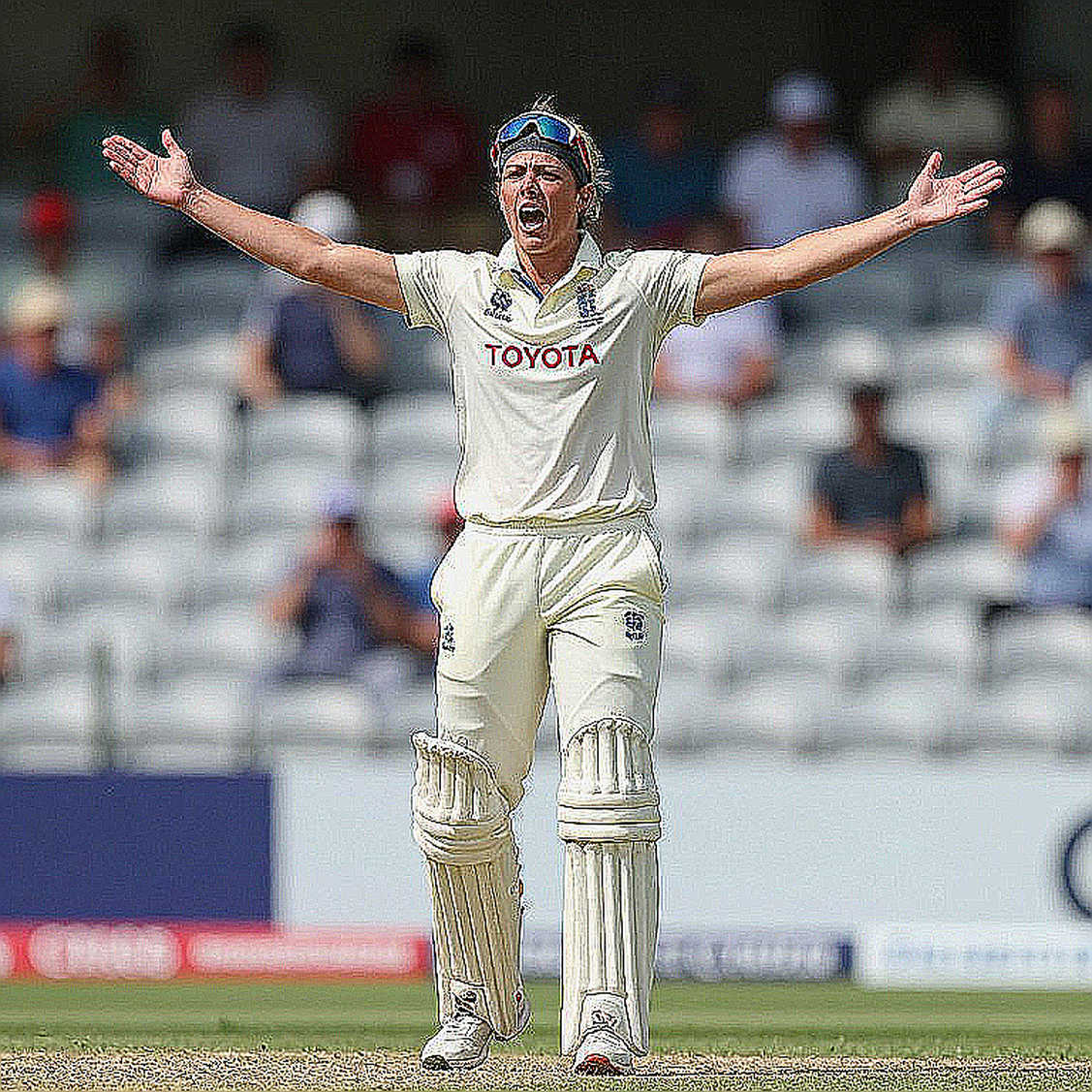
Context: this is List A, not a Test — and that is the fault line
First, separate the formats, because this report merges two different things into one sentence. This is a Cricket Australia One-Day Cup match — domestic 50-over List A, a ten-over powerplay with two fielders out, middle-overs accumulation, a final-ten death phase. New South Wales made 371 for 8 at 7.42 an over. Western Australia were bowled out for 293 in 46.3 overs.
The second thing is the Sheffield Shield 151* — red ball, longer format, not out. The headline bundled both into "second ton in four days", then converted the bundle into a Test-selection argument. Technically this is a three-format collapse inside one sentence: List A white ball, Shield red ball, and Test red ball in unfamiliar conditions.
There is a rule on my desk that has held for three decades — change the colour of the ball and the question changes with it, even when the batter does not. Russia taught me to keep the expected-goals model and the question in separate paragraphs; in cricket the same rule sits between strike rate and selectability. A strike rate of 113.7 is a measurement. "Ready to open in a Test" is a decision. A model has to sit between the two, and in this report the model is not present.

What I was not given matters too, because the reader has the right to re-run my argument and catch me. There is no toss information. There is no data on heat, wind, dew or pitch preparation — "earlier in the day" establishes only that this was a day match, which lowers dew risk. The bowling card is incomplete: Nisbet's 3 for 47 and Jackson's 2 for 58 account for five of the ten Western Australia wickets. Who took the other five, in which over, with which ball, is not recorded. There is no phase-by-phase run-rate breakdown either, which means the powerplay, middle and death splits below are my inference, not stated fact.
Core: opening up the anatomy of 149
The boundary-dependency arithmetic
Of Konstas's 149, fifteen fours and four sixes — 84 runs — came in boundaries. That is 56.4% of his total. Elite List A strike rate sits roughly between 95 and 105; 113.7 is top-decile. But when more than half your innings is built in boundaries, it is fast rather than safe. It is a high-risk, high-reward method, and that method breaks fastest when the ball is moving and the field is closing.
The biggest strength of Konstas's innings is its strike rate, and the biggest warning for Test opening is the same number. The skill a Test opener needs divides into four parts: leaving outside off stump, surviving the new-ball movement period, batting through a session, and delaying the change of gear. An innings built at 113.7 with a 56.4% boundary share is testimony to none of them.
The 149-out-of-371 ratio
One batter producing 40.2% of the team total says the innings was built around a person, not a unit. Philippe made 51, Edwards 45 and Shaw 44 — three starts, none converted into a match-defining score. That is not a repeatable model, and it is the point the report touches but never weighs: if Konstas is picked for Australia, New South Wales lose both their leading scorer and their second-place momentum in the same week.
The 78-run margin does not show control
Here is a framing error worth correcting. A 78-run margin implies New South Wales governed the contest. In fact Western Australia were bowled out in 46.3 overs, still 78 short with 21 balls unused — but the required rate from around the 35th over was already above 13 an over. Sustaining 13 an over for five straight overs is rare in domestic cricket. The scorecard presents a brave chase; the model presents a contest that was effectively over and survived on paper for another eleven overs.
The three-innings streak and its size
71, 151*, 149 — 371 runs, two dismissals, an average of 185.5, across roughly a week. It is excellent. It is also three innings. A week-long peak is evidence of form, not of capacity — and selection panels pay for capacity, because form's modern shelf life is about two innings. The entire value of that streak is set by one variable: who was bowling.
Opposition adjustment — the least weighted fact
Western Australia are 0-3 this season with their hopes all but ended and three rounds left. A side that concedes 371 was not executing its death plans. Both of Konstas's centuries came in the same week against the same opposition — that is a scheduling coincidence, not a matchup trend. Opposition-adjusted, the run is worth materially less than the raw number. And Western Australia's batting is top-heavy: Whiteman 116, Agar 43, Turner 41 — 68% of the total from three batters, entirely consistent with an 0-3 record.
The WACA surface
The WACA was historically Australia's fastest, bounciest surface, but since redevelopment it has played flatter than its 1980s-2000s reputation. This match produced 664 runs and a 113.7 strike rate from the leading scorer. That points to a good batting deck and a quick outfield, not a seaming surface. The direct consequence is that the innings becomes artificially more readable as a Test-selection signal. An innings made on a flat deck cannot test the skill that is examined on a seaming day.
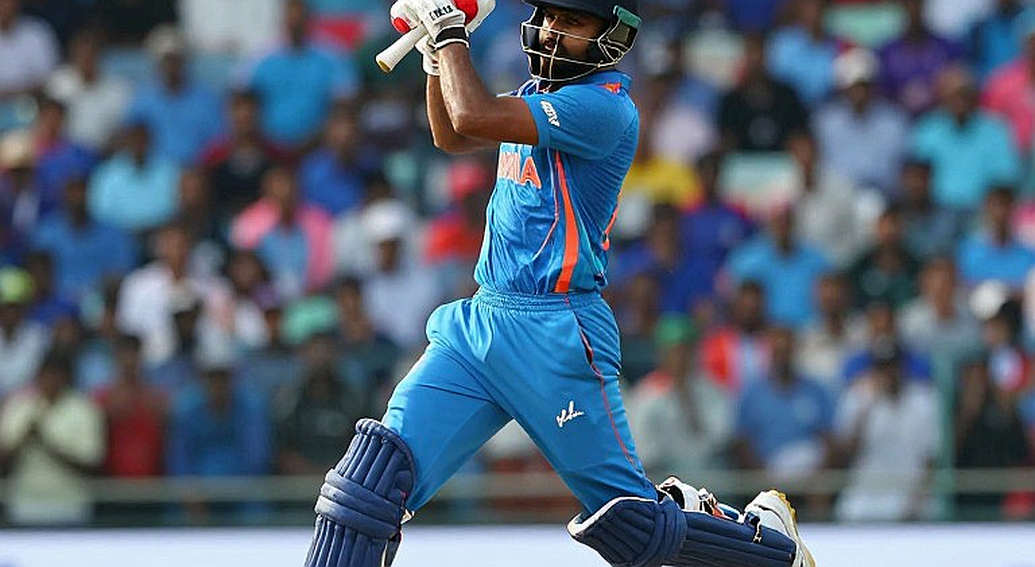
The number buried in paragraph ten
The most important sentence in the report is not in the headline. After 60 on debut against India in the Boxing Day Test of December 2026, Konstas has played nine Test innings and has not passed 25 in any of them. His last Test was in July, against West Indies. For a top-order batter, nine consecutive innings below 25 after a debut is not a form signal; it is a signal of technical exposure. And 149 on a flat WACA deck does not falsify it.
I watched that Boxing Day innings three times on tape — a 19-year-old at the MCG, against India's new ball, and what he left in the first hour was beyond his years. Then came nine innings in which the same leaving discipline visibly frayed. That gap suggests the problem is not in the eye but in the footwork.
The biggest missing input
And here is the information without which this debate cannot be settled: his dismissal-mode distribution. If the nine low scores were predominantly caught in the slips or lbw to movement, it is a technical problem. If they were caught at mid-on or deep, it is a shot-selection problem. The remedies are entirely different, and the report does not distinguish them. The 56.4% boundary dependency we extracted above points at that missing input: a low dot-ball tolerance and a high-risk release shot. Against a Test-quality new ball on a seaming surface, that method historically converts into a low average with a high strike rate — a profile selectors usually reject for an opener.
The Shield 151* was the more relevant innings
This is the strangest editorial choice in the piece. Red ball, longer format, not out — of the week's two innings it was the more relevant to Test selection. It got one clause. The white-ball innings got the headline. That is not data-driven weighting; it is marketing-driven weighting.
The age curve and the economics of patience
He is 21. Batters typically peak between 27 and 33, which puts the development window six to twelve years out. At 21, with a documented nine-innings Test failure block, the standard path is a full Sheffield Shield season of red-ball runs. Asking for a recall on white-ball form is running against the age curve.
"Fifteen months of hard work" — a claim with no evidence attached
The report states he worked hard for fifteen months. That is the author's assertion. There is no footage analysis, no red-ball data, no coach quote, no biomechanical change cited. Read it as editorial colour. The claim may well be true; it is simply not established in this text. When I publish a model I print its inputs and its failure modes alongside it; here both are absent.
Contrarian: the error is not in the numbers, it is in the framing
The Croatia error was not in the numbers; it was in the framing. In 2026 my model ranked Croatia 14th in the xG-difference column and they reached the final. The problem was not the number I produced; it was that I drew from it a conclusion it could not carry. The same thing is happening here. 149 is a correct number. "Ready for a Test recall" is the wrong conclusion drawn from it.
The gap between correlation and causation opens in two places. First: scoring runs with a white ball and opening with a red ball are different skill sets, and the correlation between them has historically been weak in cricket. Second: New South Wales winning and Konstas scoring a century happened in the same match, which makes it easy to read one as the cause of the other — when in fact they are parallel events with a shared cause in a flat pitch and an underperforming attack.
The second question nobody is asking: why is Australia's opening slot vacant? The report says the team is still searching for an opener to make his mark — that is the load-bearing claim of the whole piece, and it is an opinion, not a verified selection-panel statement. Whether the incumbents failed, were injured, or were rotated matters, because the three have different remedies. If they failed, the door is open. If they were rotated, it is shut. Without knowing which, the strength of Konstas's claim cannot be calibrated.
And an institutional point I make about any publication working for a board: this report runs on Cricket Australia's own digital platform. That does not make the claim false. It does mean it should not be read as independent selection commentary. Konstas's traffic value is disproportionately high relative to his sporting output — the media phenomenon generated by a 19-year-old's Boxing Day debut was far larger than the 60-run innings that produced it. The "second ton in four days" headline is an extension of that asset. High traffic value is not evidence of Test readiness, and this report is constructing the latter argument from the former.
I have to name my own trap here. At 1:20 a.m., the thread became the dataset — that is exactly what happened to me after Lord's in 2026, fourteen tweets and eleven years of data hardening into a single certainty. The thread travelled; the framing had to be fixed afterwards. This 149-run headline belongs to the same species: clean, fast, and presenting a question as an answer. So I am deliberately printing a reading against myself — if Konstas scores 400-plus red-ball runs in the Shield next month and I am proven wrong, the error will not lie in how I read the 149. It will lie in having used that number to answer a question white-ball data cannot answer.
Takeaway: where to look for the next signal
The scorecard will show you 149. For me the next signal sits in three places, all of them outside the scorecard. First — his opening ten balls in the next Sheffield Shield round, with the ball moving and three slips in. Second — his dismissal-mode distribution across the next four red-ball innings; if they are going to point and cover, the footwork has improved, and if they are going to slip, nothing has changed. Third — whether the selectors name him for the first Test or for an Australia-A tour, because that correspondence alone will reveal whether Australian cricket regards him as a form claimant or a development investment. The 371 runs were made in a week. The question is about the next six months, and it will not be settled with a white ball.